

Small Cabin Storage Ideas: A Room-by-Room Checklist

A cabin has a way of exposing everything you own. The moment you arrive with a weekend bag, a cool box and two pairs of walking boots, the walls seem to close in. But the problem is rarely a lack of space. It is a lack of places to put things down. Holiday lodges and compact cabins work best when storage is built into the rooms you already use, so nothing has to be carried upstairs or hidden under a bed at the last minute.
What follows is a checklist you can work through one room at a time. Not every idea will suit a timber cabin with sloped ceilings or a static caravan with narrow corridors, so treat it as a menu. Pick two or three fixes per room, do them properly, and the difference will be felt every time you unpack the car.
Start at the door: hallways and porches
The entrance sets the tone. If coats, keys and muddy boots land in a heap within a metre of the door, the rest of the cabin never quite recovers. This is the one area worth spending proper money on, because it does the heaviest lifting.
- A bench with storage underneath. A lift-up lid or two deep wicker baskets will swallow hats, gloves, torches and dog leads without any of it being visible.
- Wall-mounted hooks at two heights. Adult coats high, children's coats low. A double row above a bench uses the same wall twice.
- A shallow shelf at eye level for keys, a spare head torch and the cabin visitor book. Anything deeper becomes a dumping ground.
- An umbrella stand or tall basket for walking poles, rolled-up maps and wellies that are still wet.
If the porch is unheated, keep anything damp out there rather than in the hall. A simple lidded boot box stops the smell of wet rubber drifting into the living room.
Boot rooms and utility corners
In a holiday lodge, the boot room usually doubles as the laundry, the drying room and the place where the dog sleeps. That is a lot to ask of two square metres. The trick is to stack functions vertically rather than spreading them sideways.
Use the wall, not the floor
Fit a rail with adjustable brackets and hang wet jackets above a tray. Add a second rail below for folded drying. A slim tower of stacking baskets can hold one household's worth of outdoor kit each, labelled by name if the cabin is shared. Overhead, a shelf running the full width of the room holds cleaning supplies, spare bulbs and the toolbox, all in plain sight but out of reach of everyday clutter.
Make the washing machine earn its space
A counter over a washing machine creates a folding surface and a cupboard above it for detergent and pegs. If floor space is tight, a pull-out drying rack mounted inside a tall cupboard is far more useful than a freestanding airer that has to be packed away every evening.
Kitchens: the hardest-working room in a small cabin
Cabin kitchens are often galley-shaped or tucked into a corner, which means every centimetre counts. Before buying anything, empty one cupboard and look at what is actually in it. Most cabins hold three times the crockery they need and a decade of mismatched mugs.
- Clear the worktop first. A cluttered surface makes a small kitchen feel half its size. Move the kettle, toaster and utensil pot only if the new home is genuinely convenient, otherwise you will drift back.
- Add a slim pull-out unit beside the oven for oils, spices and chopping boards. Narrow pull-outs fit gaps that cupboards cannot use.
- Hang a rail under the wall units for mugs, utensils and small pans. It frees drawer space and looks intentional.
- Use the inside of cupboard doors. A rack for foil, cling film and baking paper costs little and removes a daily annoyance.
- Keep a lidded box for the cabin's own kit — the corkscrew, the cafetière, the spare tea towels — so it never migrates home with you.
A word on open shelving: it looks lovely in photographs and works well for pretty, frequently used items. It is a poor choice for the things you would rather not look at. Choose one open shelf, then close the rest.
Living areas: storage that hides in plain sight
The living room is where a cabin earns its keep, so storage here needs to disappear. The best solutions are furniture that does two jobs.
A bench under the window can hold games, blankets and spare cushions, and it gives you somewhere to sit with a mug of tea. An ottoman in front of the fire stores the same things and doubles as a footrest. If the cabin has a wood burner, a tall log basket and a smaller kindling basket keep ash and mess contained, and a metal bucket with a lid keeps the hearth tidy between stays.
Think about the last hour of a stay
Packing up is when chaos usually wins. A shallow tray or lidded box on a shelf, clearly reserved for chargers, cables and batteries, saves the frantic search on departure morning. Keep a single drawer for cards, board games and pens so wet afternoons have an answer.
Bedrooms and sleeping nooks
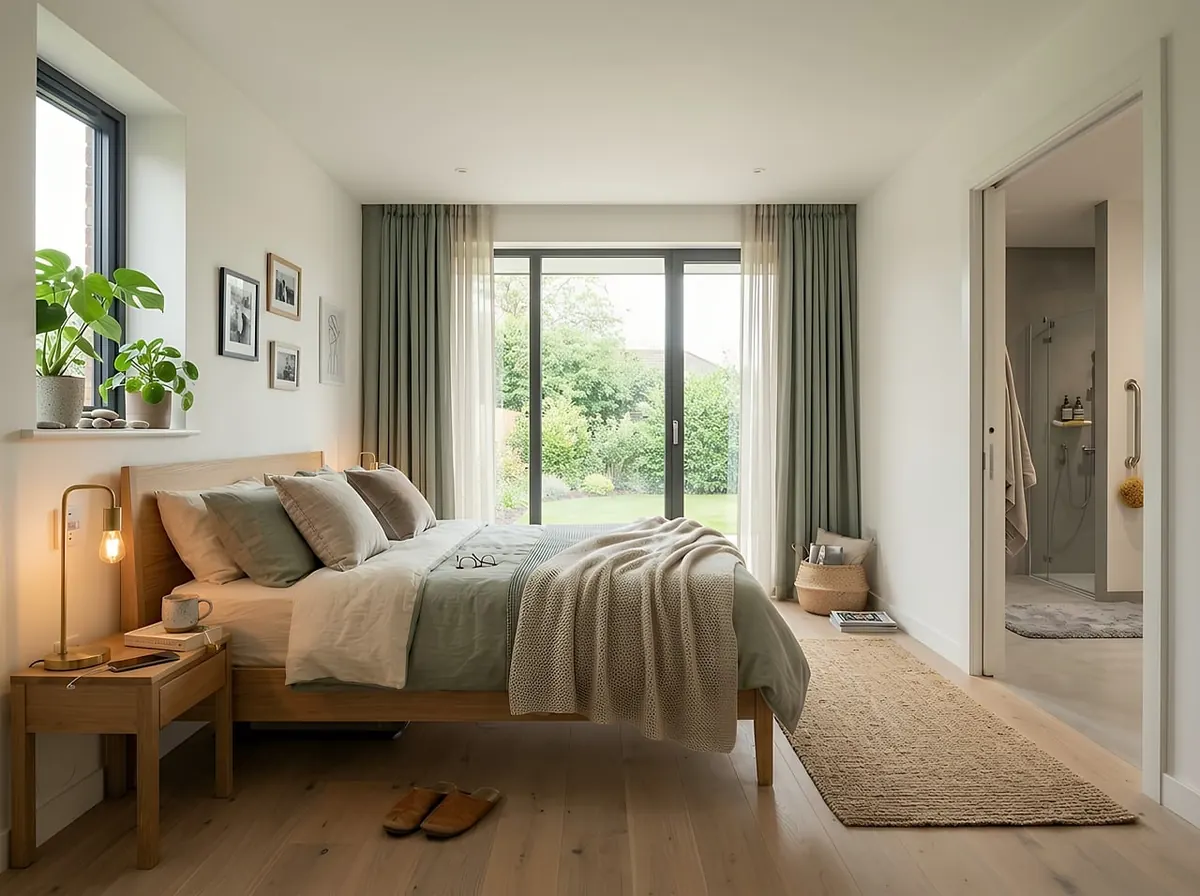
Cabin bedrooms are often small, sometimes with sloped ceilings that rule out tall wardrobes. Work with what the room gives you.
- Under-bed storage. Shallow lidded boxes on castors beat vacuum bags for everyday use, and they slide out without disturbing the mattress.
- A shelf above the headboard instead of a bedside table, with a small hook for a reading light.
- Hooks on the back of the door for dressing gowns, towels and tomorrow's clothes.
- An open rail or a short hanging space in the corner, if a full wardrobe will not fit. Most cabin stays need less hanging space than people assume.
- A basket per person for the bits that never quite get put away.
If the cabin sleeps six but only has hooks for two, that is the real problem. Count the people, then count the places each of them can put a bag, a coat and a pair of shoes.
Bathrooms and awkward corners
Small bathrooms respond well to a few inexpensive additions. A slim freestanding shelf over the cistern, a suction or screw-fixed caddy in the shower for the cabin's own shampoo, and a towel rail within reach of the door all help. Rolled towels in a basket take less shelf space than folded stacks and look tidier.
Do not overlook the gap beside the basin or the space above the door. A shallow wall cabinet there holds first aid supplies, spare loo roll and cleaning cloths, all of which tend to be forgotten until needed. Keep cleaning products in their original labelled containers and out of reach of children.
A checklist to work through this weekend
You do not need to overhaul the whole cabin at once. Walk through each room with a notepad and answer three questions: where do coats and shoes land, where does outdoor kit dry, and where do bags and games live between visits? The room that fails most often is the one to fix first.
Then buy only what solves a problem you have already noticed. A bench with a lift-up lid, a rail of hooks, two stacking baskets and a lidded box for chargers will transform most compact cabins for very little. Measure the gap before you order anything, check that doors and drawers will still open, and remember that in a small space, one honest piece of fitted storage usually beats five clever gadgets. Build it into the room, label it if the cabin is shared, and the place will feel bigger the moment you walk in.
Photo: 12019 / Pixabay