

How to Layer Textures in a Rustic Living Room: A Beginner's Guide
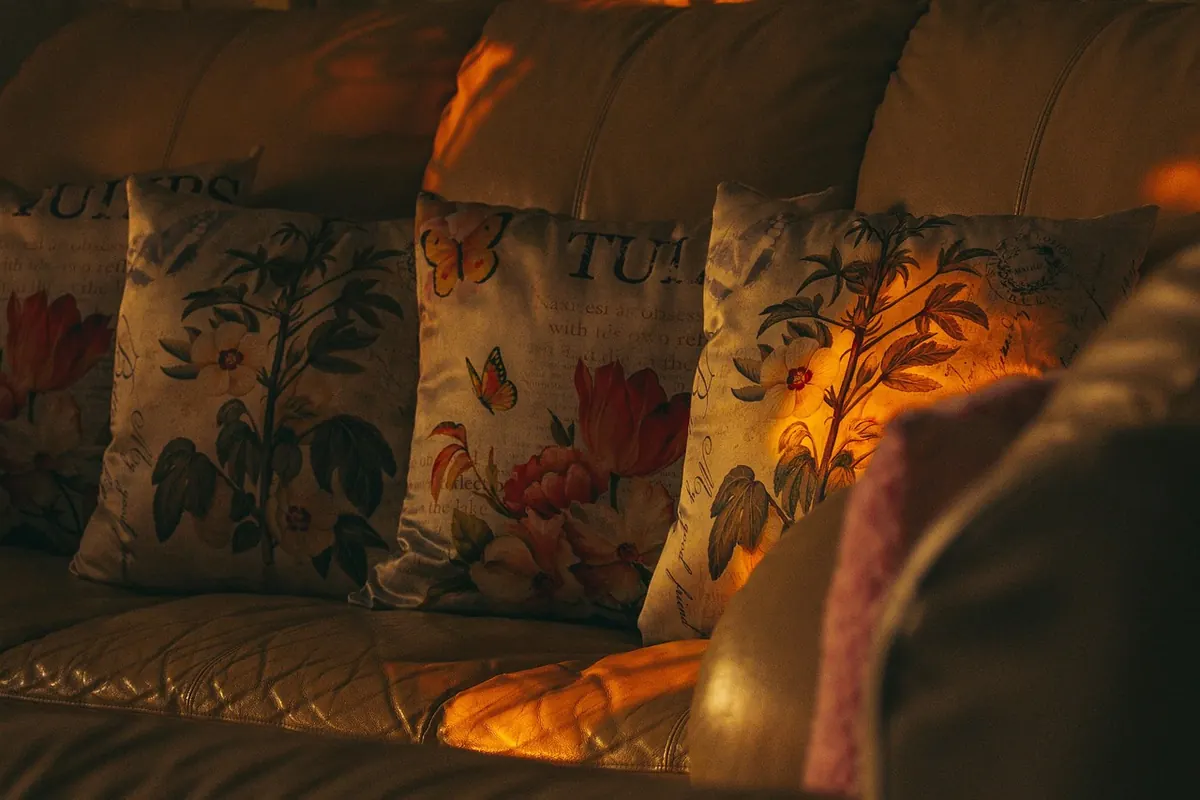
A rustic living room can have all the right pieces and still feel oddly flat. The timber beam is there, the chunky coffee table is there, the rug is doing its job, and yet the room reads as though it has been assembled rather than lived in. Texture is usually what is missing.
Layering texture does not mean buying more. It means putting the right materials next to each other so wool, linen, wood, stone and metal each get a chance to register. Get the order right and you can do most of it in an afternoon.
Start With the Biggest Surfaces
Texture is easiest to control if you build in layers, starting with whatever takes up the most visual space: the floor, the sofa, the walls. In a rustic room, wool and linen do most of this work because they are soft, matte and slightly irregular.
A wool rug with a visible weave is the single fastest fix for a bare floor. Choose one large enough that the front legs of the sofa sit on it and it reaches past the edges of your seating area — a postage-stamp rug makes a room look smaller. If you want more depth underfoot, layer a finer flatweave or a jute rug underneath a thicker wool one, but keep the top rug smaller so the layers are obvious.
Then dress the sofa. Washed linen cushion covers bring a soft, slightly crumpled surface that contrasts nicely with wool's fuzz, and a heavy wool or mohair throw folded over an arm adds weight where the room feels lightest. If you have curtains, linen or a wool-blend fabric will do more for the room than a synthetic weave that hangs stiffly and reflects light.
Weight matters as much as material
A fine linen cushion beside a chunky knitted throw works because the two soft textures differ in scale. Two chunky knits side by side often just look like one large blur. Whenever you pair similar materials, separate them by weight, sheen or scale.
Build the Middle Layer With Wood and Stone
Wood and stone are the bones of a rustic room, and they work best when they sit close to something soft. An oak coffee table with a linen runner and a stoneware bowl on top will always look more considered than the same table left bare.
Stone can be a fireplace surround, a slate hearth, a travertine side table, a marble tray or a simple stoneware vase. You do not need a stone wall. A single cool, hard, matte surface somewhere in the room is enough to balance all the warm timber around it.
Mixing wood tones without a matching set
Matching furniture sets are the quickest way to make a rustic room feel like a showroom. Instead, pick one dominant tone — say, honey-toned oak — and support it with two others: one darker, such as walnut or aged pine, and one paler, such as ash or bleached wood. Three tones is plenty. Repeat each one at least twice in the room, even if only in small doses like a frame, a bowl or a stool, so the mix looks deliberate rather than accidental.
Add Metal Last, and Sparingly
Metal is the accent layer, not the main event. It gives the eye a crisp, reflective note against all that soft matte material, which is why a black iron candleholder or an aged brass lamp base can lift a corner that otherwise feels sleepy.
Choose two metals at most and repeat each of them at least twice. Aged brass warms up a grey stone fireplace; blackened steel or wrought iron holds its own against pale linen. Highly polished chrome tends to fight a rustic scheme, and thin, shiny finishes can look flimsy next to heavy timber. Matte, patinated or brushed finishes almost always sit more comfortably.
The Three-Texture Test
Before you add anything else, look at each main surface in turn — floor, sofa, wall, tabletop, windowsill. If a surface has only one texture, it will read as flat. Aim for three, at noticeably different scales.
- Wool and linen: soft against soft, but different weight and sheen.
- Wood and stone: warm against cool, grain against mineral.
- Linen and iron: light against heavy, pale against dark.
- Stoneware and glass: matte against reflective, in small doses.
- Leather and wool: smooth against fuzzy, especially on seating.
- Jute and stone: rough against smooth, useful on floors and hearths.
A stone hearth with a wool rug, an iron log basket and a linen cushion beside it passes the test easily. Four materials in one view is usually enough; more than that and the eye stops reading texture and starts reading mess.
Where Beginners Usually Go Wrong
Too many materials at once. Six textures competing in one sightline cancel each other out. Walking from the doorway into the room, count what you can see at once and keep it to three or four.
Everything at the same scale. A chunky knit, a deep-pile rug and a rough plaster wall can merge into one soft mass. Mix fine with chunky: a fine linen shade next to a heavy wool throw, a slim metal frame next to a thick oak top.
Confusing pattern with texture. Checks, stripes and florals are pattern, and they need counting separately. Two patterns in a room is comfortable; five is noise. Keep patterns apart from each other, and let texture do the work in between.
Forgetting the light. Texture is only visible when light rakes across it. One or two low lamps — a table lamp, a floor lamp — will show up the weave of a rug or the grain of a table in a way a single ceiling light never will.
Making everything new. A little wear is part of the look. One aged or hand-finished piece per surface, such as a scuffed stool or a weathered tray, gives the eye somewhere to rest.
The Step Most People Skip
Once the room is arranged, take one thing off each surface. Then photograph it from the doorway in the evening with the lamps on, and look at the picture rather than the room. If the image reads as a flat, mid-toned blur, the problem is usually contrast in tone rather than a shortage of texture. Add something dark or something pale, and leave the rest alone.
A Simple Order of Work
- Clear the room back to furniture and rugs only.
- Lay the base layer: rug, curtains, sofa textiles.
- Add wood and stone pieces — tables, trays, stoneware, a stone top or hearth.
- Add metal accents: a lamp, candleholders, drawer pulls, fire tools.
- Set two lamps at different heights and switch the ceiling light off.
- Photograph the room, then remove one item and live with it for a week.
You can start this today without spending anything. Swap two cushions between rooms, move a wooden stool next to the fireplace, put a stoneware bowl where a glass one sits, and turn a lamp on instead of the main light. Texture layering is a habit of looking rather than a shopping list, and the room will tell you fairly quickly what it still needs.
Photo: Rattakarn_ / Pixabay